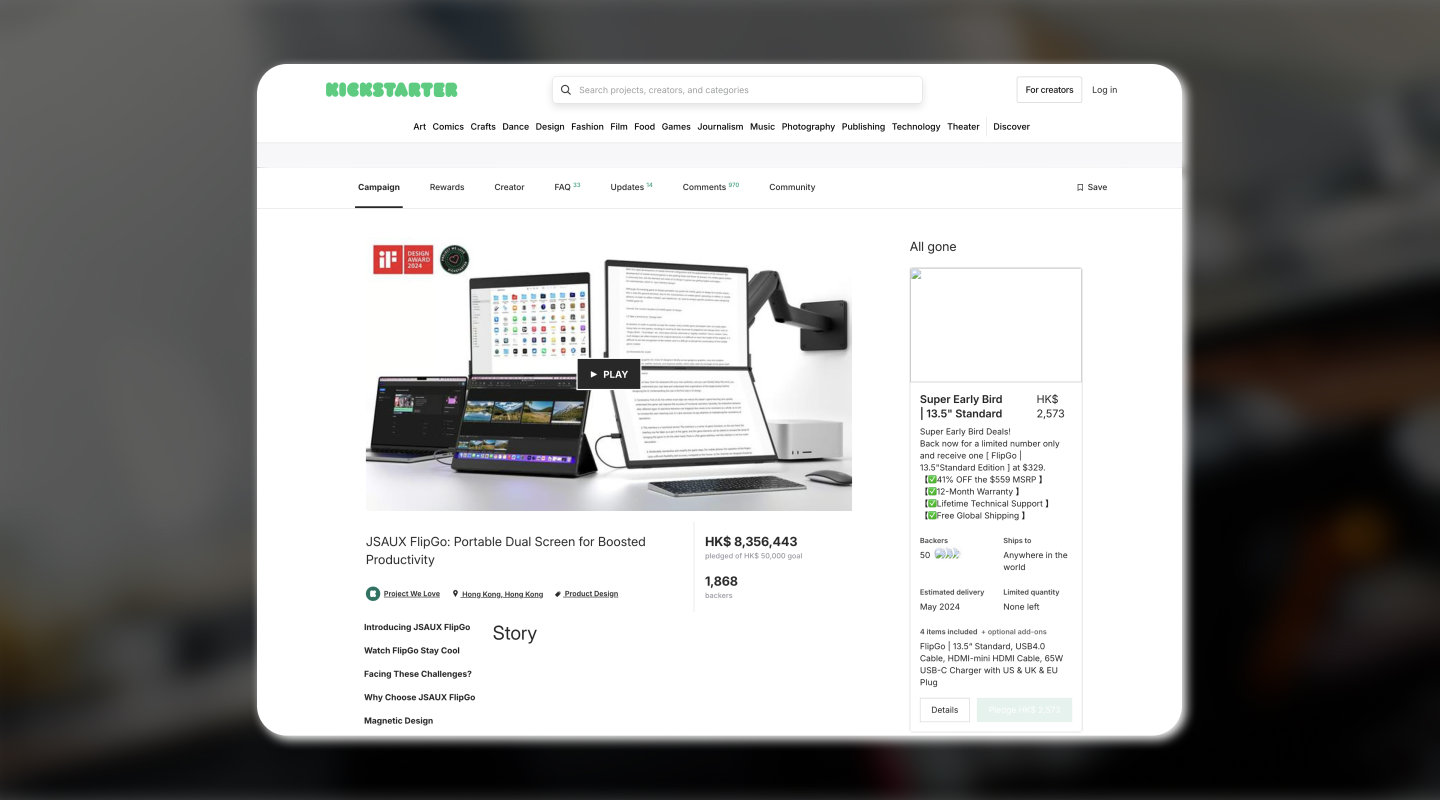
n early 2024, JSAUX launched a portable folding dual-screen monitor on Kickstarter. Funding goal: $6,400. Final result: over $1,070,000 raised, 16,712% funded, 1,868 backers.
A category with no reference point
JSAUX is a consumer electronics brand focused on PC peripherals. FlipGo was their new product heading to Kickstarter — a portable dual-screen that connects to a laptop via a single USB-C cable, unfolds into a triple-screen workstation, and folds down to roughly the thickness of a 13-inch MacBook. They came to us to produce the video for their crowdfunding launch.
The product logic was straightforward: people who work on the go need more screen space, but nobody wants to carry a monitor. FlipGo folds two screens behind the laptop lid — open it up, plug it in, and you’re working on three displays.
But when we took on the project, our first question wasn’t how to shoot it. It was the problem this product would face at launch. Portable multi-screen is a category that barely exists. Most people have no frame of reference for it, no prior experience to draw on. The price isn’t low either. Asking a stranger on Kickstarter to back something they’ve never seen or used, within a few minutes of landing on the page — that’s a hard sell no matter how good the product is.
Not specs. A way of working.
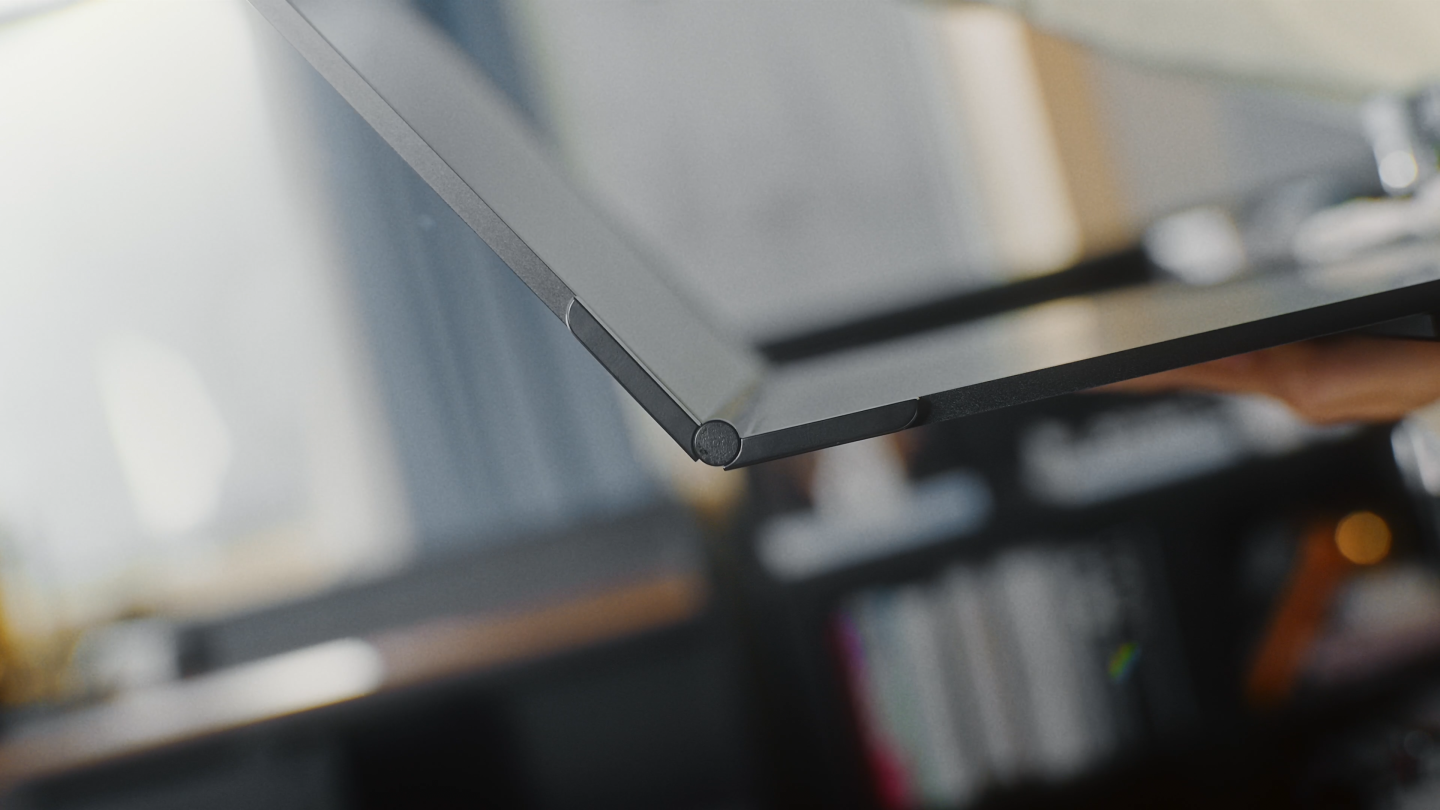
Tech crowdfunding videos tend to follow a familiar playbook: list the specs, demo the features, tell people how fast, how thin, how powerful. There’s nothing wrong with that approach, but for FlipGo it wasn’t enough. The people FlipGo needed to convince weren’t the ones who already knew they wanted more screens — they were the ones who hadn’t yet realized they could work this way. For that audience, specs are abstract. You tell them 13.3 inches, 60Hz, single USB-C connection, and it doesn’t land.
So our call was this: the video’s job isn’t to introduce what the product does. It’s to show people what working looks like after you have it. A group of real people, in their own environments, doing the things they’d actually do on any given day — video calls, coding, research, email, multitasking across windows. The product is in the frame as a tool, not the star. After watching, the reaction shouldn’t be “nice specs” — it should be “I want to work like that.”
Making every frame of screen content work
With the strategic direction in place, the next question was how to actually shoot it.
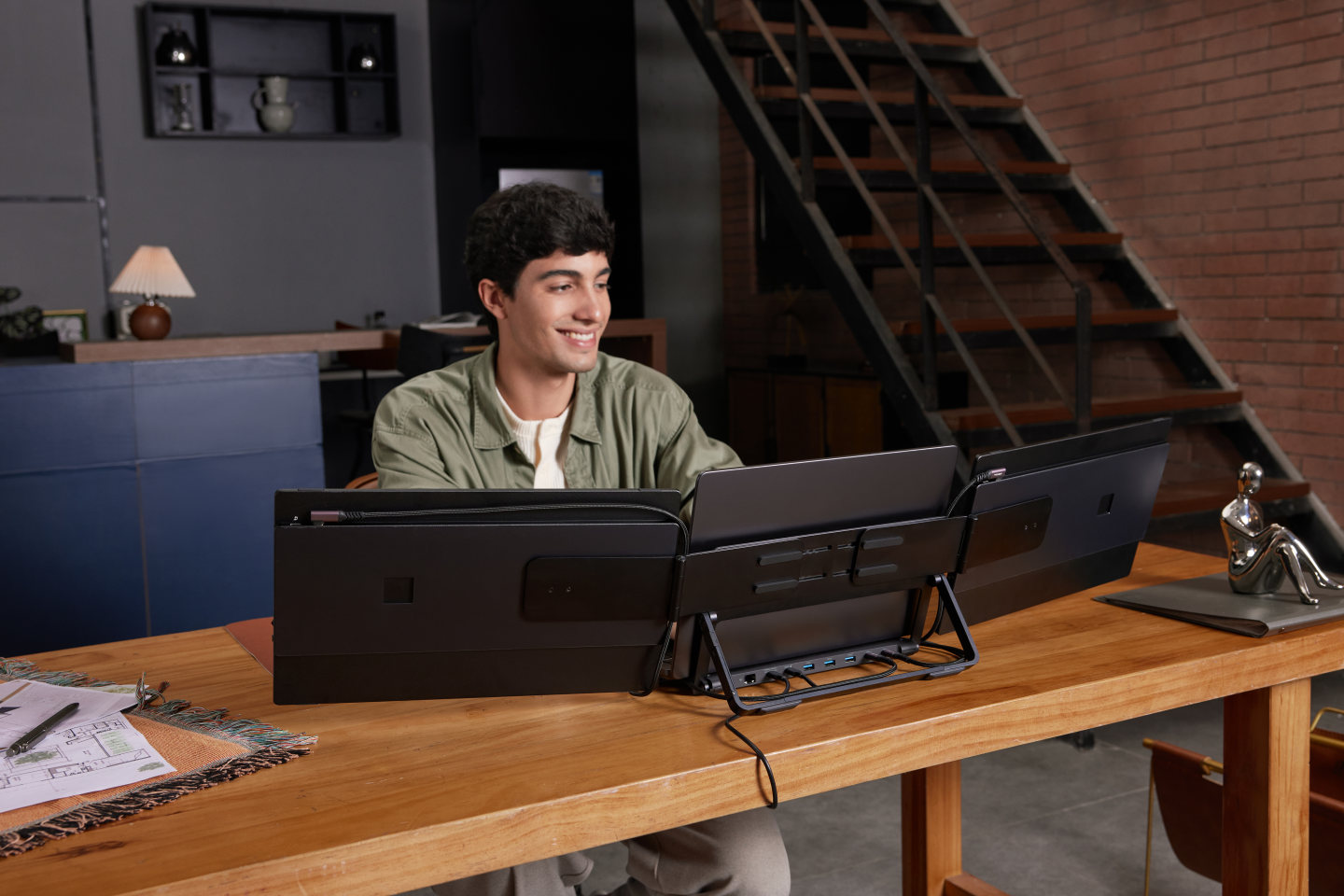
The video features four or five different people, each in their own environment — home, café, studio — using FlipGo the way they’d actually use it. One person is on a video call, another is writing code, someone else is using the touchscreen, and others are switching between portrait and landscape depending on what they need. Different jobs, different settings, different workflows, but the same thing happens every time: three screens, each doing its job, work moving forward.
The ensemble approach was deliberate. Show one person and the audience thinks “that’s how they work.” Show a group and the message shifts to “this is how people work” — it stops belonging to a specific person or profession and starts feeling like something anyone could use.
There was a critical production decision here. With three screens visible in every frame, what each one displays directly determines whether the audience can understand how this product is used. If the screen content is random or blurry, the entire “show the scenario, not the specs” strategy falls apart. That’s why we chose to shoot on green screen and composite in post — not to save on location costs, but because every frame of screen content needed to be designed in advance, matched precisely to the actors’ movements during the shoot, and composited frame by frame afterward. The workload was significant, but that’s precisely why the final result feels the way it does: the three screens aren’t “displaying” — they’re working.

Top 20 in Kickstarter Tech, globally
The video launched alongside FlipGo’s Kickstarter page.
Goal: $6,400. Final amount raised: over $1,070,000. Funded: 16,712%. Backers: 1,868. Ranking: top 20 in Kickstarter’s global tech category.
Beyond the numbers, there was another result: after the campaign ended, JSAUX came back with a new project.
A crowdfunding video is not the same thing as an ad. An ad sells something that already exists in the world. A crowdfunding video sells something that doesn’t — yet. You have to make people feel, before the product is even in their hands, that this thing belongs in their life.
On this project, what we were really communicating was this: FlipGo isn’t selling two screens. It’s selling the feeling that a new way of working is possible.