Ten million users.
No voice — until now.
HUANUO sells more monitor arms than anyone on Amazon. But no one knew what the brand stood for. This is how we changed that — with four curves.
Category champion, brand invisible.
Amazon #1 in monitor arms, ten million users, 127,000+ reviews — yet outside a product search you'd never encounter HUANUO. Every piece of communication spoke the same language: specs, diagrams, feature bullets. Precise load-bearing data, but nothing about how this brand understands ergonomics. Ergo360 was its first attempt at brand expression — one language across a brand film, an immersive landing page, and social videos.
The concept was already in the client's draft, buried as one paragraph among product descriptions — the only paragraph explaining "why" instead of "what": HUANUO designs from how the body's curves change across postures. Four curves. That phrase became the core of the entire project.
Four curves. Every body.
Ergonomics is a word everyone has heard and no one can define. Four curves make it concrete — they can be drawn, filmed, animated. They exist in every body, change with every posture, and are interconnected: neck angle affects spinal loading, lumbar support changes knee pressure.
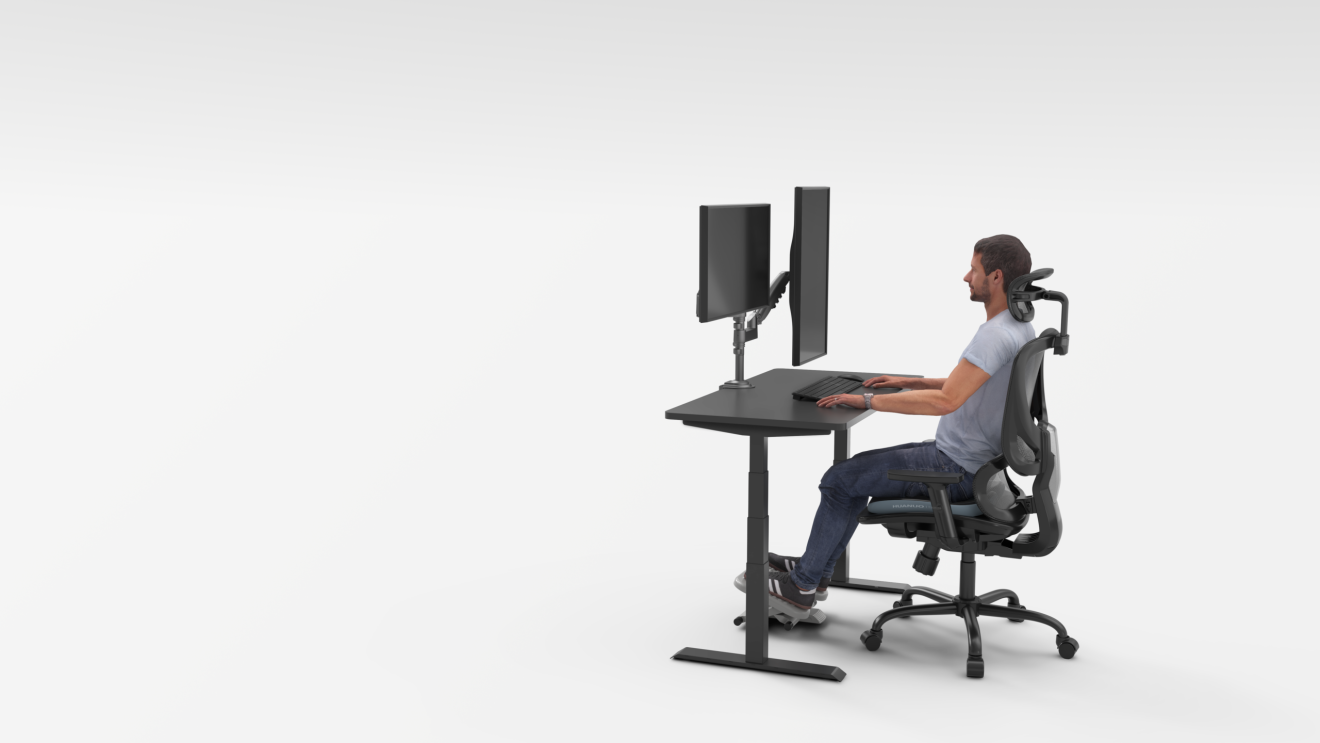
The forward arc of the cervical spine. Fluid on a morning run, rigid after two hours at a screen. Where you look defines how you hold yourself.
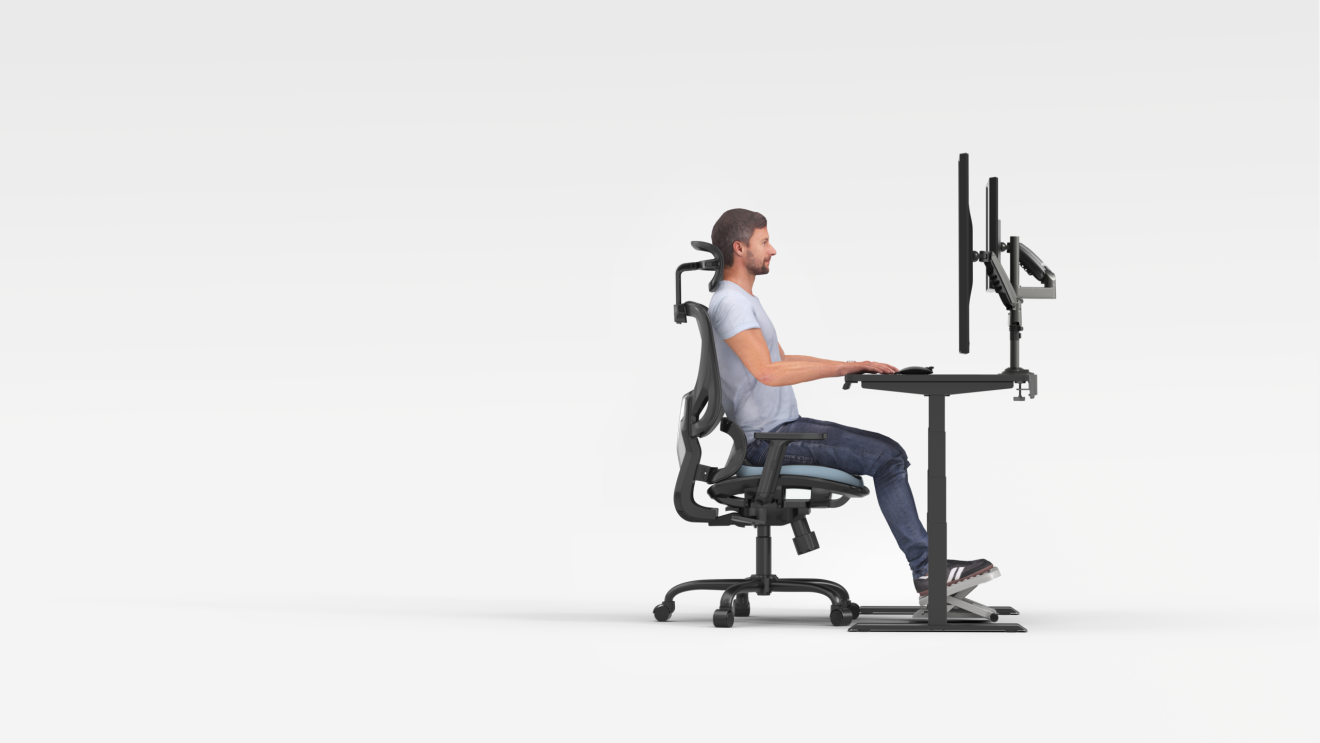
The spine's S-curve loads differently every hour you sit. Either the support follows the S — or your muscles do the frame's job.
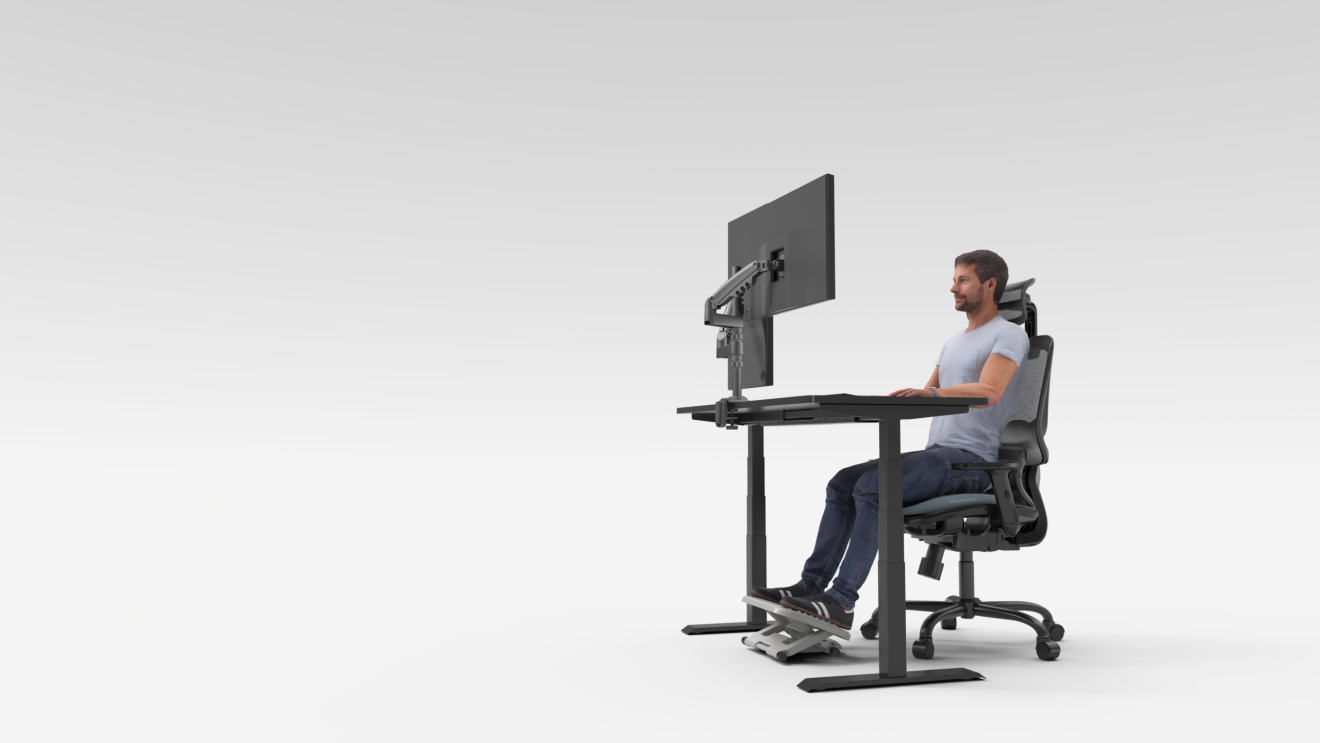
The lumbar gap — the hollow you feel at 4pm. Left open, the pelvis tilts and the whole spine compensates.
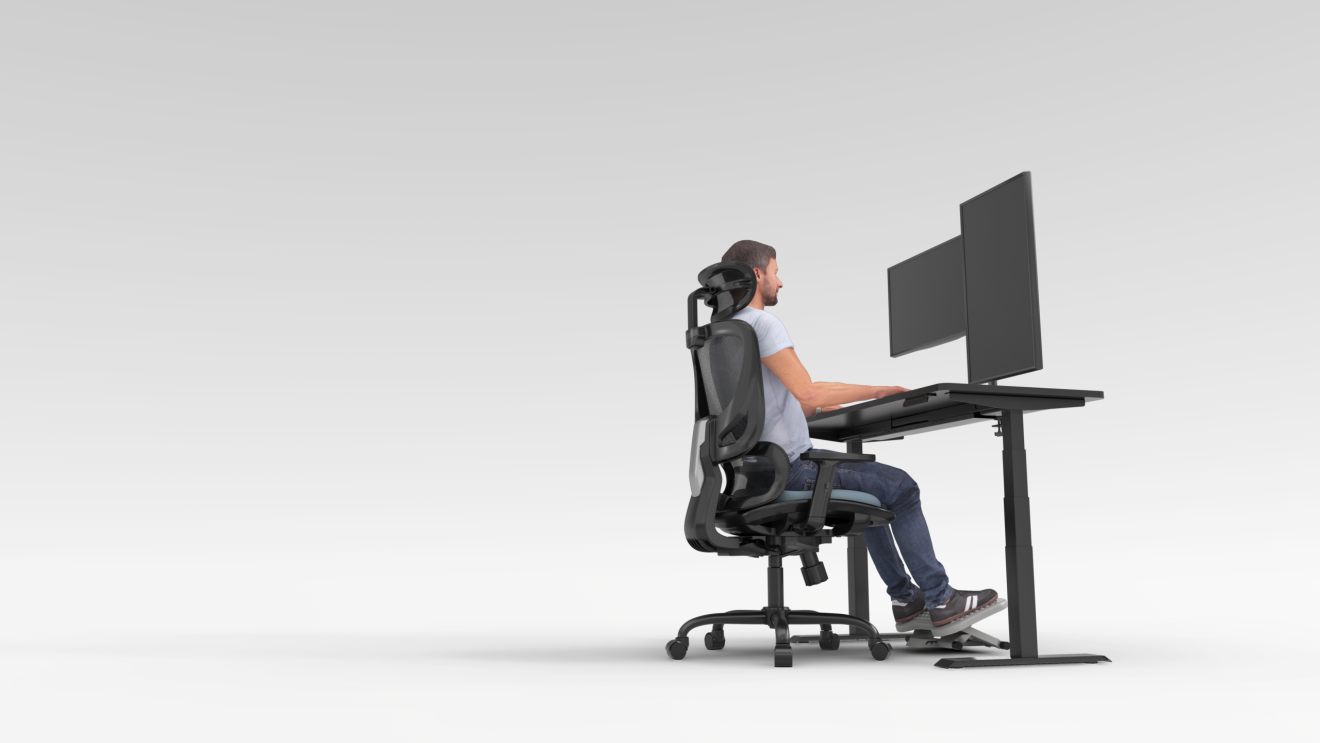
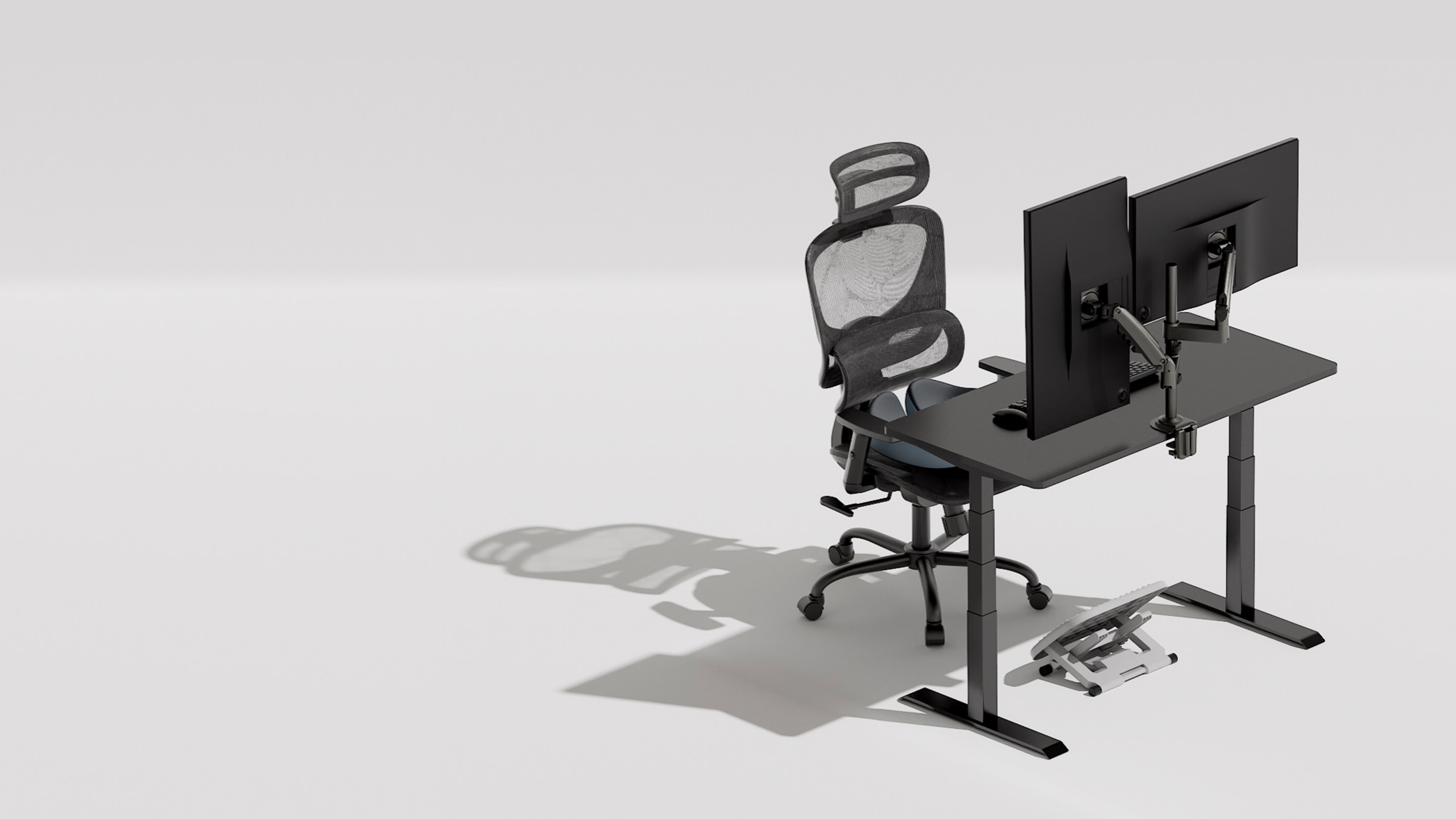
The bend of the knees sets pressure for the entire lower body. Comfort is built from where the feet rest, upward.
"We started by watching."
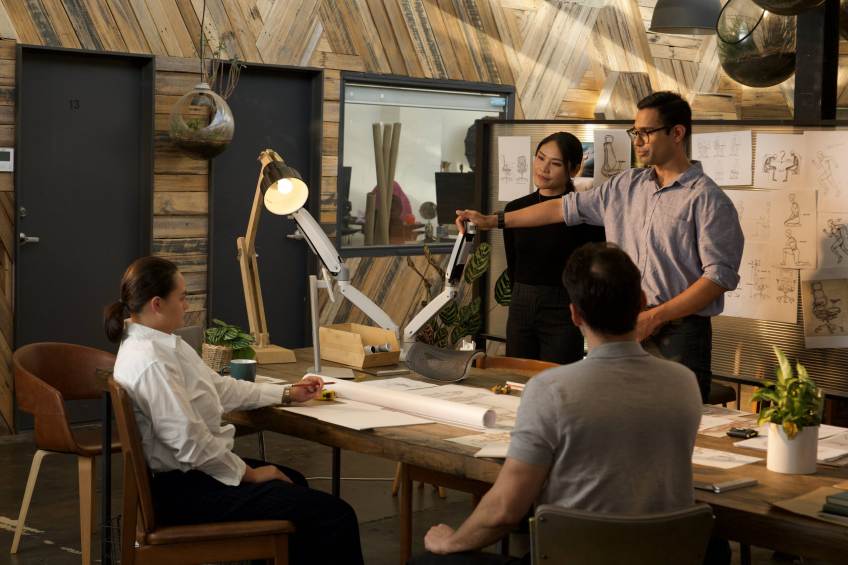
Ergonomic ads have a default template: suffering worker left, happy user right, product in the middle. Any competitor can shoot that and swap the logo. This film takes a different posture — observer and listener, not evangelist. Shot in Melbourne over three days, two cuts: 120s and 60s.




From reading to experiencing.
The client's draft read like a ten-minute article — too slow for a visitor from an ad. One structural shift: the page is arranged by body part, feet to head — footrest → cushion → chair → desk → monitor arm. Scrolling is the process of understanding complete support. And the Ergo Quiz starts from the user's own body: a few questions, a recommendation based on your answers — "you should buy the whole set" becomes "your body is telling us what you need."
It all runs on Shopify — every block an independent section that can be called, duplicated, rearranged. Not a fixed page: a toolkit. The client team later copied high-performing modules straight to the brand homepage themselves.


A concept isn't valuable. A concept turned into usable brand assets is.
The film became an asset library — re-edited by the client into paid-media clips. The landing page became a module kit — reassembled into campaign pages and the brand homepage. The social videos took a different tone entirely, but every body reaction in them is the everyday expression of the same framework. Different expression, consistent logic.
Four Curves is a structure, not a tagline — anchored to the body, not to any product, so it won't expire with iterations. And the modular delivery gave the client's team the ability to assemble brand expression on their own. Good brand infrastructure doesn't make the client come back every time. It lets them keep moving forward without you.