Selling a way of working
that didn't exist yet.
A portable dual-screen monitor, a category with no reference point, and one crowdfunding video. Goal: $6,400. Raised: over $1,070,000.
A category with no reference point.
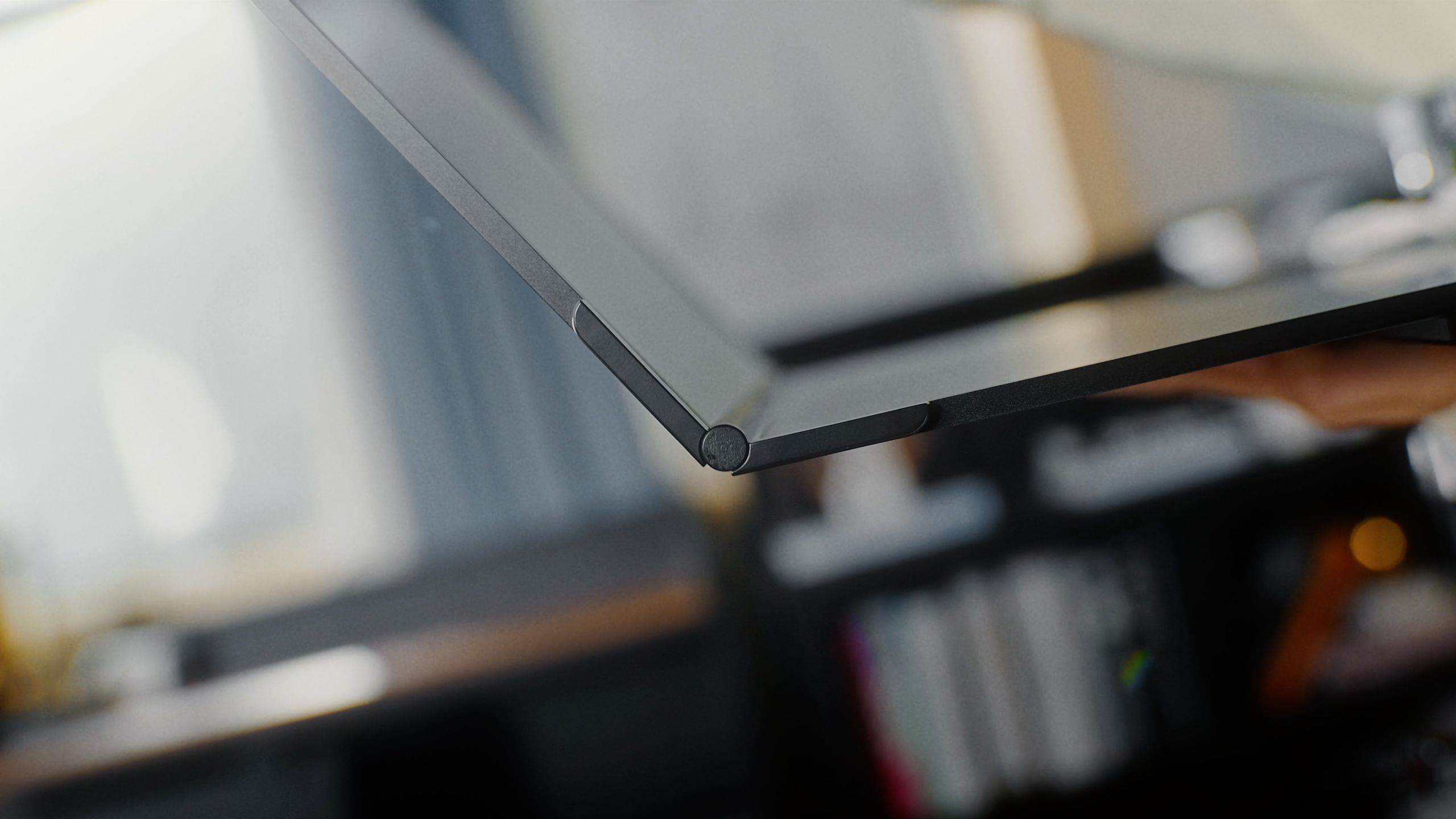
FlipGo unfolds into a triple-screen workstation off a single USB-C cable, and folds down to roughly the thickness of a 13-inch MacBook. Clever product, clear logic — and almost nobody has ever seen one. Portable multi-screen barely exists as a category. No frame of reference, no prior experience, and a price that isn't low.
Our first question wasn't how to shoot it — it was what this product would face at launch: a stranger on Kickstarter, a few minutes of attention, and a thing they've never held. That's the problem the video had to solve.
Not specs. A way of working.
The people FlipGo needed to convince weren't the ones who already wanted more screens — they were the ones who hadn't realized they could work this way. For that audience, "13.3 inches, 60Hz, single USB-C" is abstract. So the video's job isn't to introduce what the product does. It's to show what working looks like after you have it.
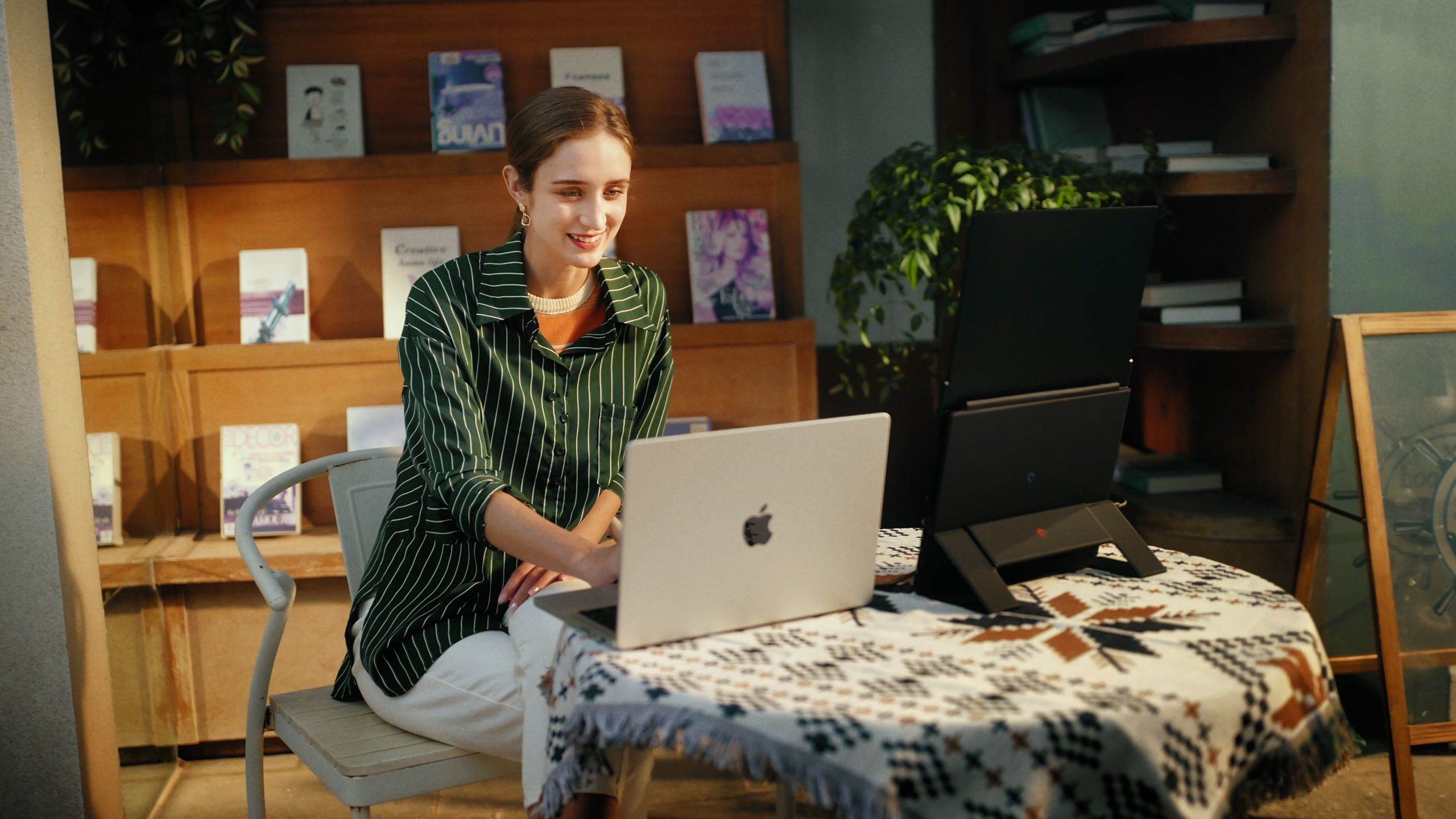
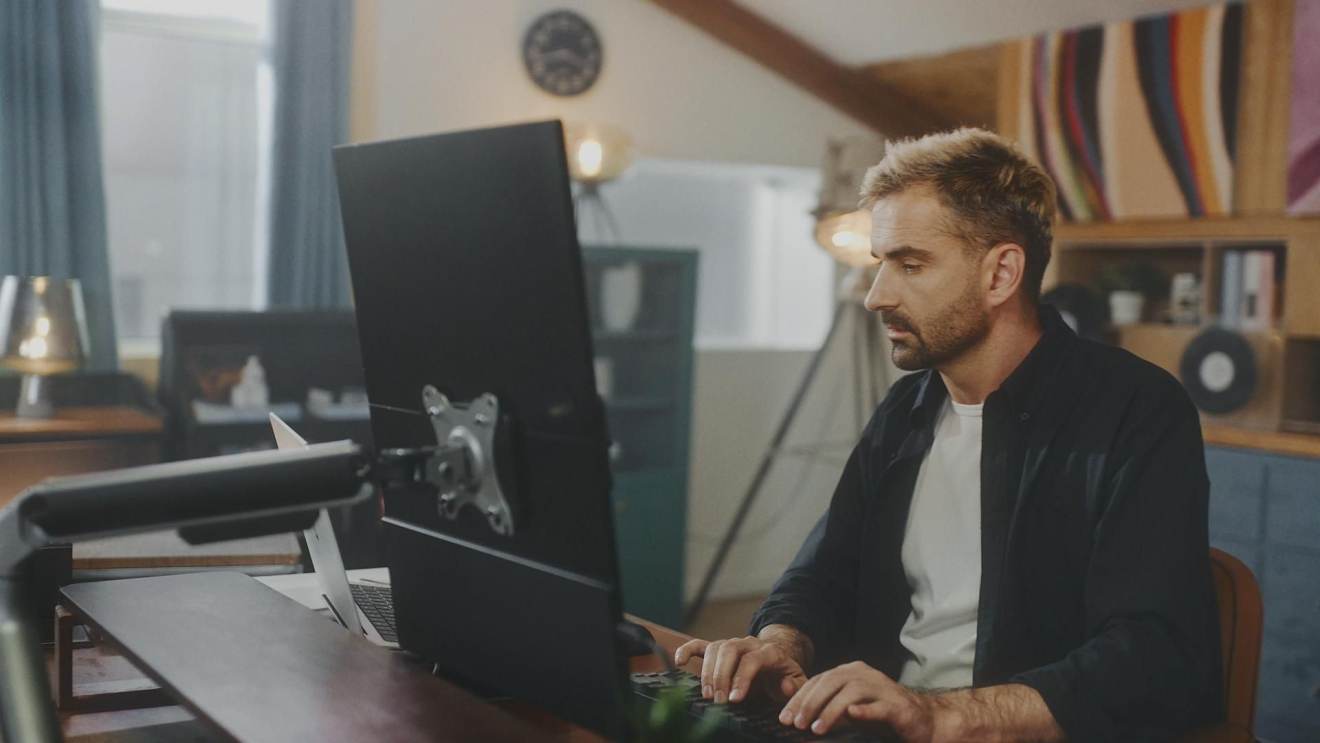
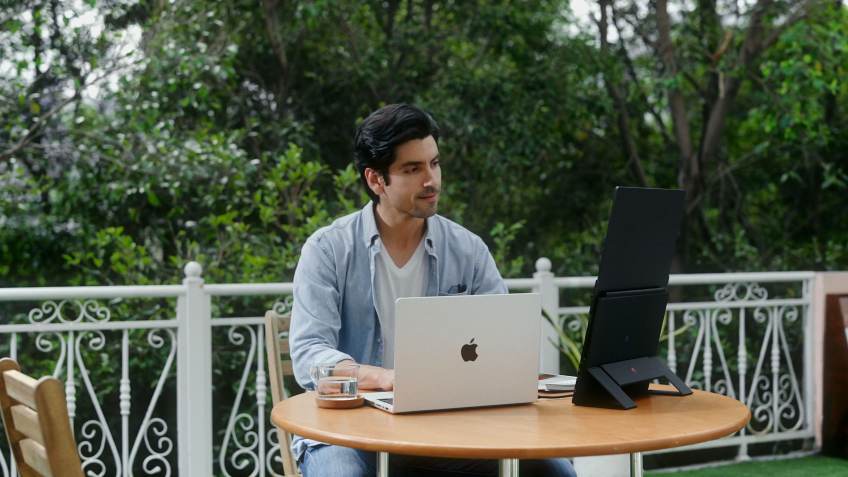
A group of real people in their own environments — video calls, code, research, email — the product in frame as a tool, not the star. Show one person and the audience thinks "that's how they work." Show an ensemble and it becomes "this is how people work." After watching, the reaction shouldn't be "nice specs" — it should be "I want to work like that."
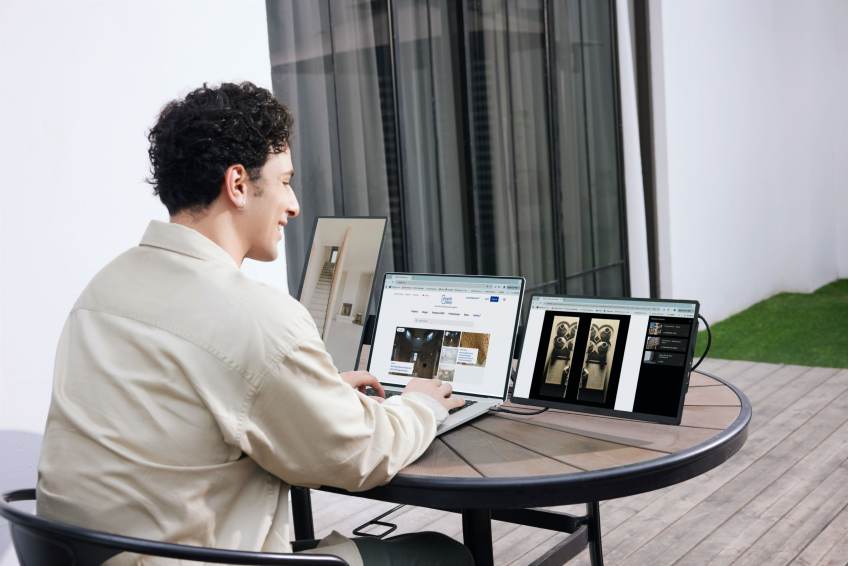
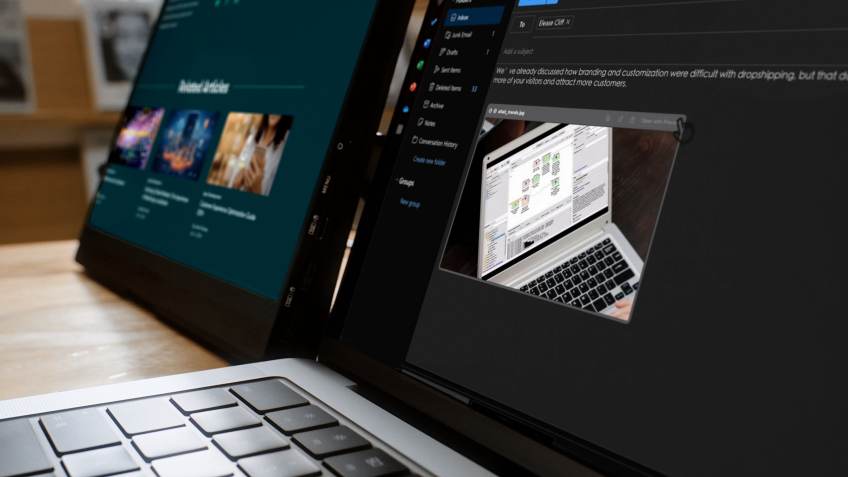
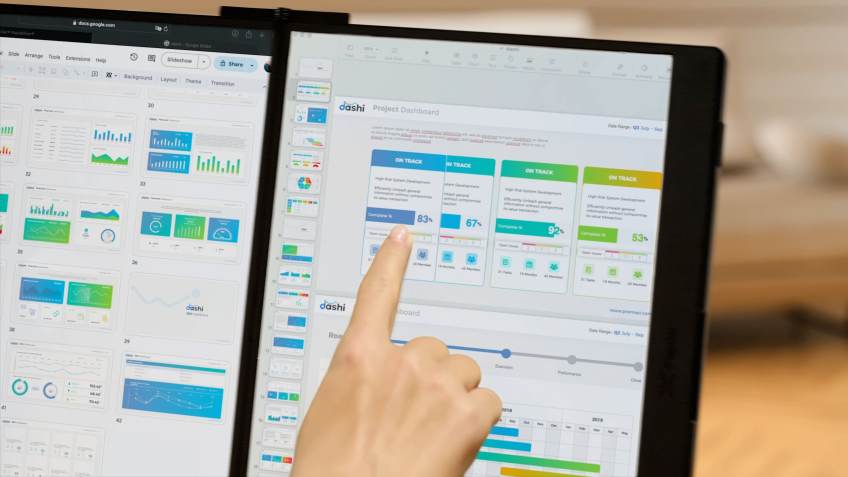
Every frame of screen content, designed.
With three screens in every frame, what each one displays decides whether the audience understands how the product is used. Random or blurry content and the whole "show the scenario, not the specs" strategy collapses.
So we shot on green screen and composited in post — not to save on locations, but because every frame of screen content had to be designed in advance, matched to the actors' movements on set, and composited frame by frame afterward. The workload was significant. It's also exactly why the result reads the way it does: the three screens aren't "displaying" — they're working.
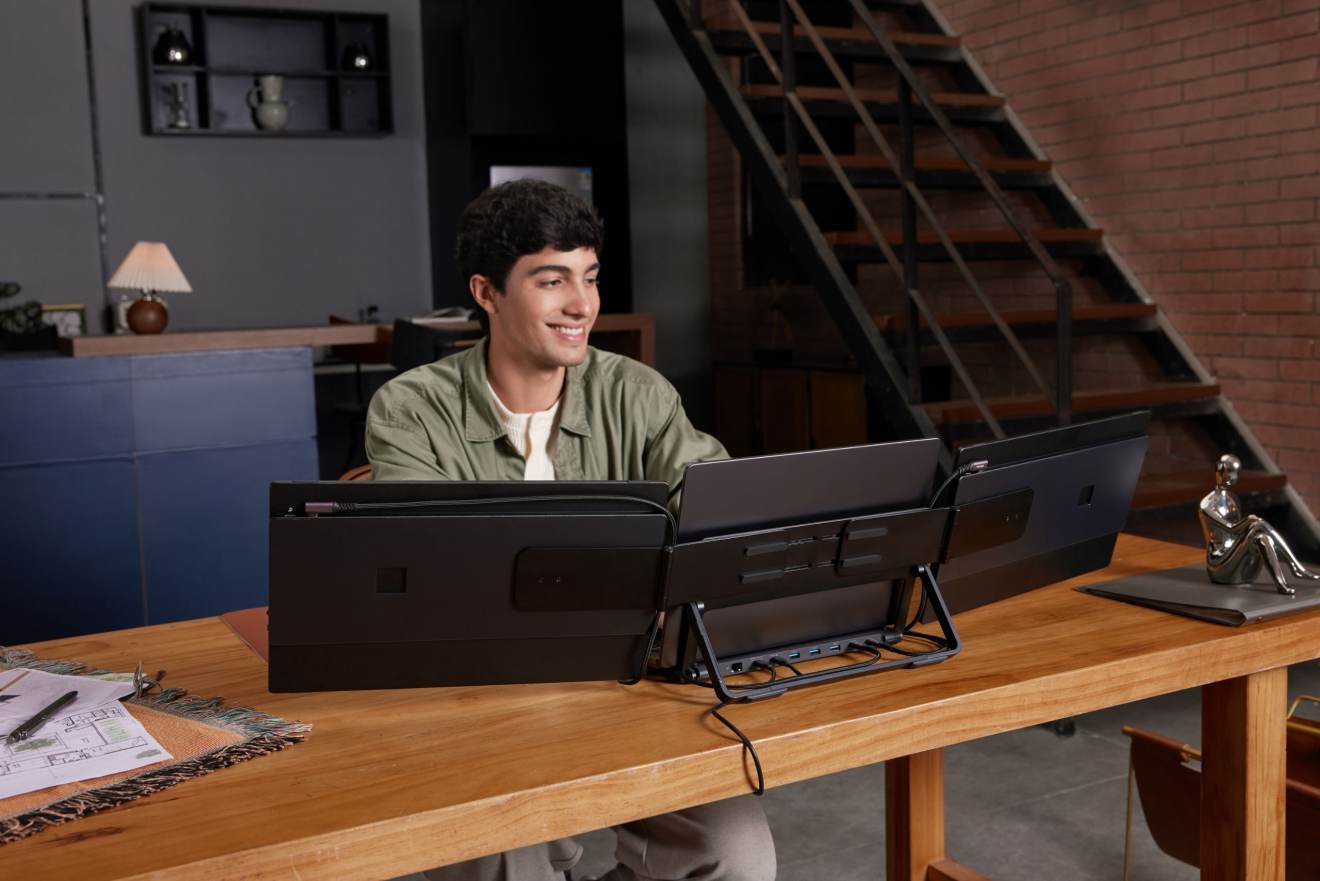
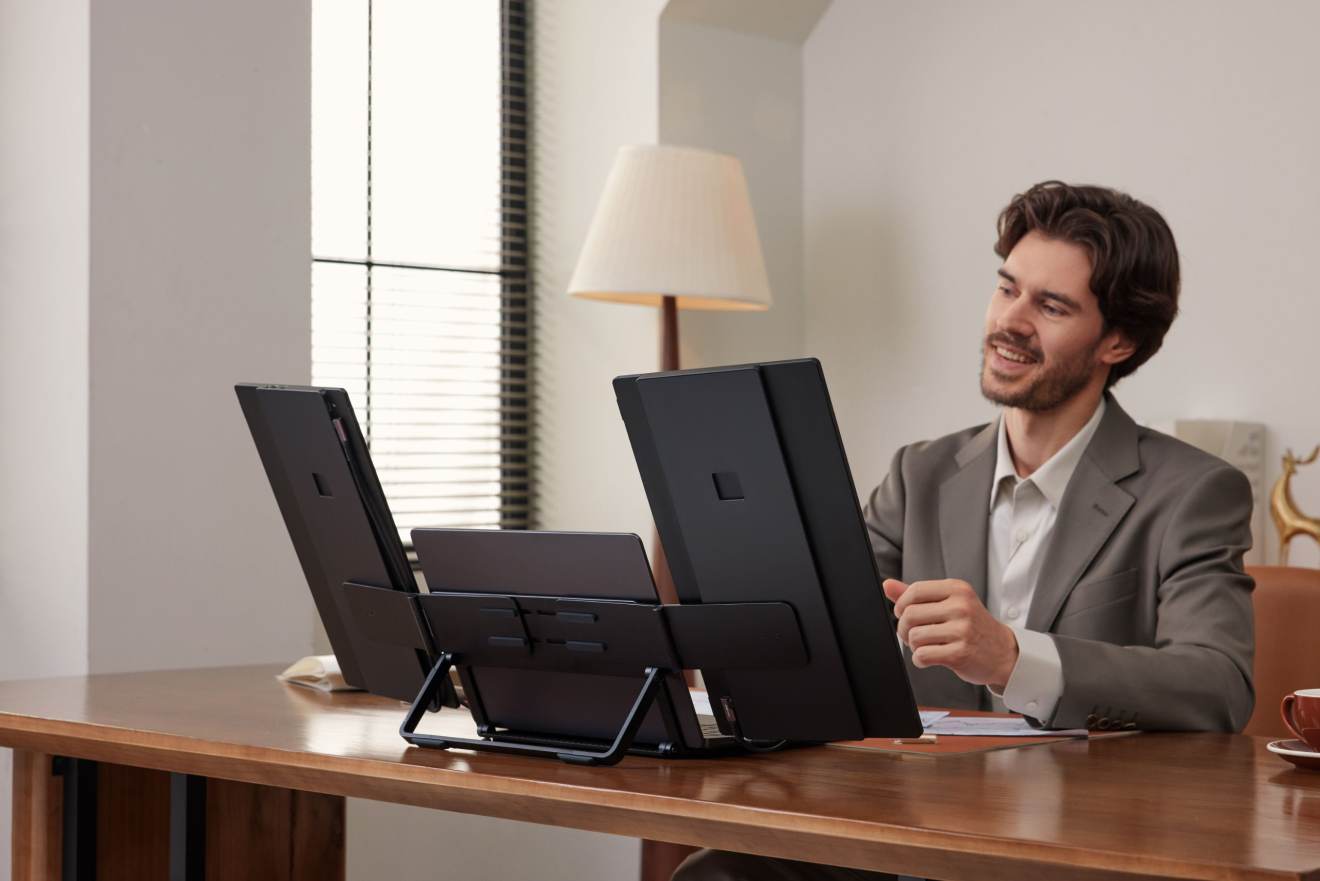
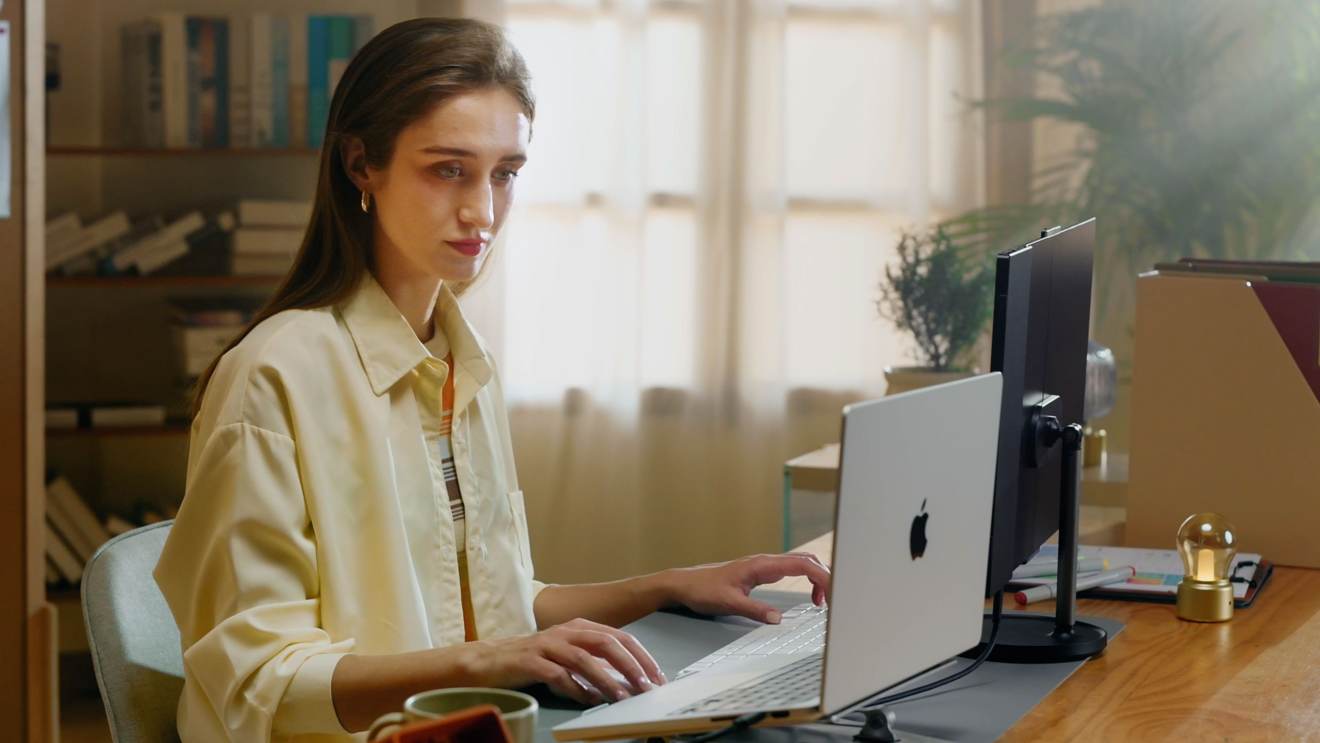
$6,400 asked. $1.07M answered.
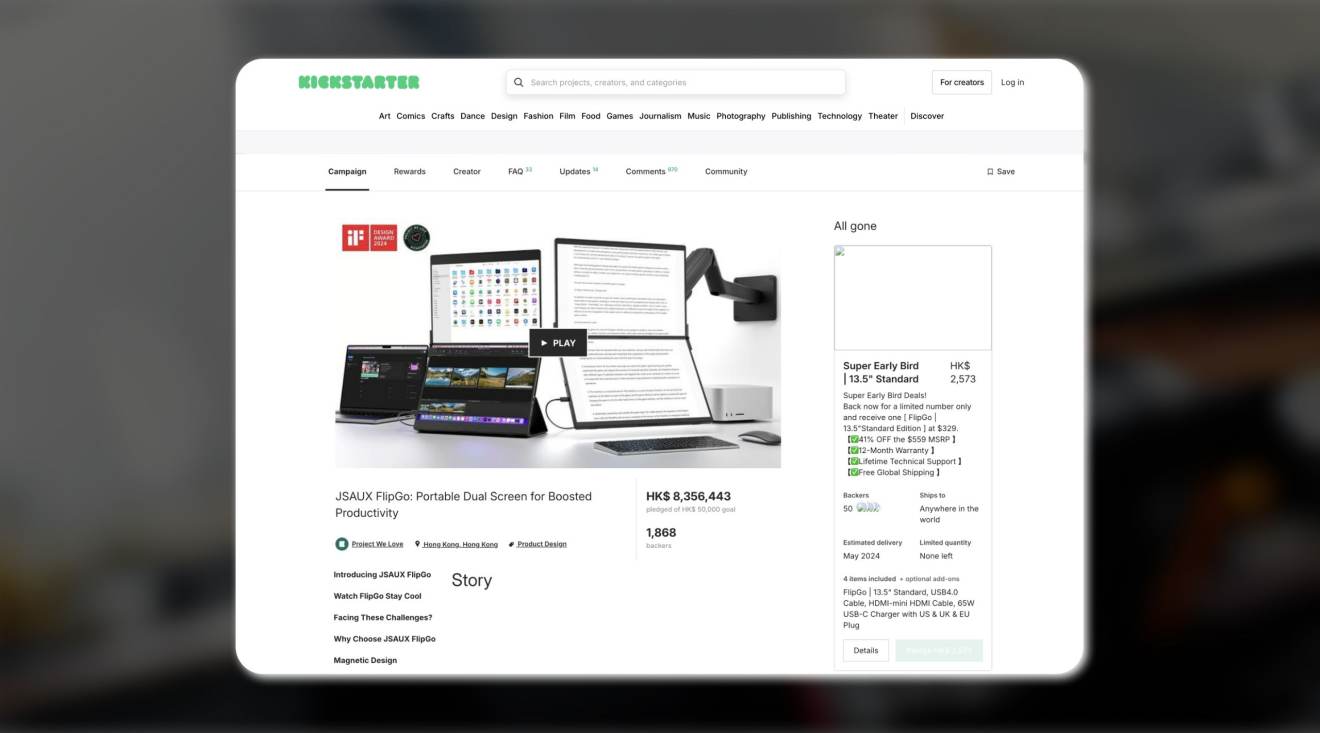
The film launched with FlipGo's Kickstarter page: 16,712% funded, 1,868 backers, top 20 in the global tech category — with an iF Design Award badge on the campaign header.
And one more result the numbers don't show: after the campaign closed, JSAUX came back with the next project.
An ad sells what exists. A crowdfunding film sells what doesn't — yet.
You have to make people feel, before the product is in their hands, that this thing belongs in their life. FlipGo wasn't selling two screens. It was selling the feeling that a new way of working is possible — and every decision in the film, from the ensemble cast to the frame-by-frame screen content, existed to make that feeling concrete.